Text To Image
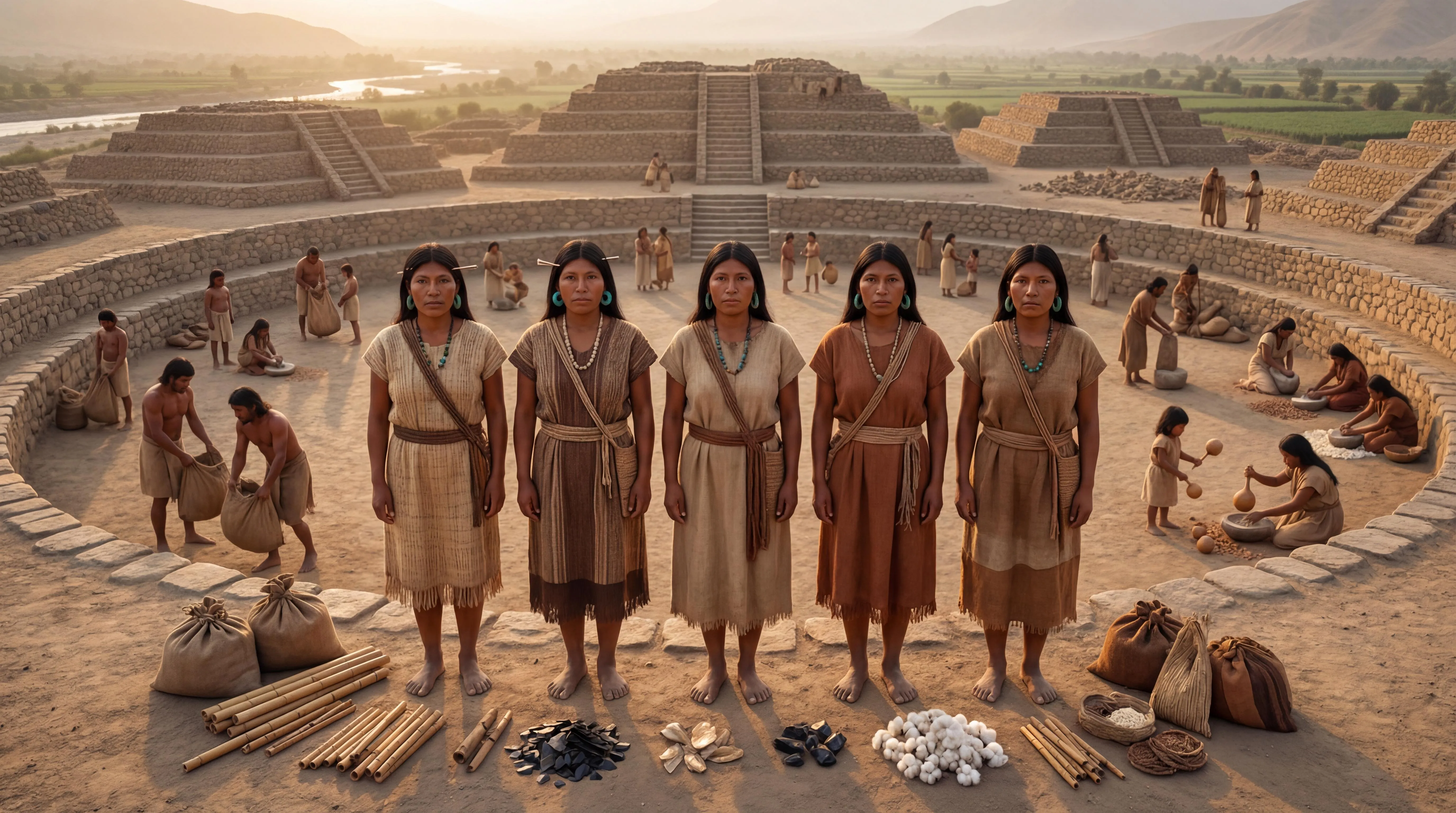
Caral-Supe Civilization – Ultra Photorealistic FULL-BODY IMAGE (Women Completely Inside Frame) Ultra-photorealistic 8K full-body image of five beautiful women from the ancient Caral-Supe civilization (Sacred City of Caral, Peru, c. 2500–1800 BCE), all completely visible from head to toes within the image frame with no body parts outside or cut off by edges, standing in a perfect straight line facing the viewer at the upper edge of the main sunken circular plaza. Show authentic early Andean / Norte Chico features: copper-brown skin, straight black hair, high cheekbones, dark expressive eyes, sturdy but elegant builds. All five women entirely contained within frame boundaries, bare feet clearly visible on dusty plaza floor. They wear archaeologically plausible organic-fiber clothing: woven reed or grass skirts reaching mid-calf in natural beige and brown tones, narrow llama-wool chest bands or simple reed shawls covering the chest, no modern tailoring. Over their shoulders hang visible quipu cords (knotted counting strings) in natural fiber colors. Jewelry is simple and ancient: stone and quartz bead necklaces, small shell elements, llama bone hairpins in their hair, and turquoise-style ear spools – all attached physically and not changing or growing. Each woman has a slightly different combination of skirt tone, band or shawl, necklace and hair ornament, but everything stays within a realistic, natural color palette. Around their feet in the foreground lie authentic Caral-Supe objects: several quipu bundles neatly coiled, reed flutes and simple bone flutes, piles of raw cotton bolls, llama bone tools, obsidian blade flakes, and a few shicra bags (woven reed bags filled with stones used in pyramid construction). All objects look used and functional, not decorative props. The background is a lively, fully populated Caral scene with more than 50 people from the same epoch. In and around the sunken Plaza Mayor behind the women, show about 15 men in reed skirts and shawls hauling heavy shicra bags, carrying small llama offerings and arranging construction stones; about 25 women in grass skirts and chest bands grinding cotton seeds on stone manos and metates, weaving reed baskets, and filling gourd water vessels; around 12 children in small reed cloths playing with cotton-boll toys, tiny quipu cords, and reed whistles. Place a group of musicians blowing bone flutes near the plaza steps, and a few workers higher up on the platforms. Surround the plaza with the characteristic Caral architecture: six low, earthen platform pyramids faced with stone (especially the Pirámide Mayor), circular stone amphitheater structures, and a few reed-thatched elite residences on the terraces. In the far background, show the dry coastal desert plateau dropping down to a green Supe River valley with irrigated cotton and squash fields and a winding river. Lighting is warm golden hour just before sunset, with long soft shadows, slight dust haze in the air, and physically accurate shading on skin, reeds, and stone. Style is ultra-photorealistic: detailed pores and slight sunburn on all visible skin, clear reed weave and llama-wool texture, dust on the women's feet, sharp focus on the five full-body women and foreground objects, slightly softer but still detailed background. All women completely inside frame boundaries with no limbs, hair, or feet extending beyond image edges.