Text To Image AI effects generated image

Text To Image

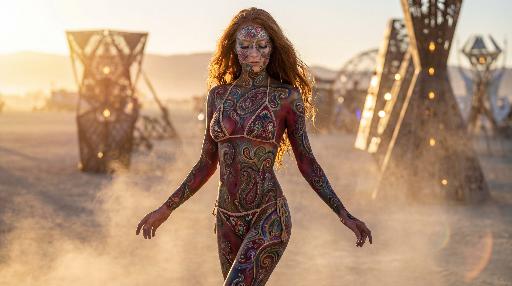
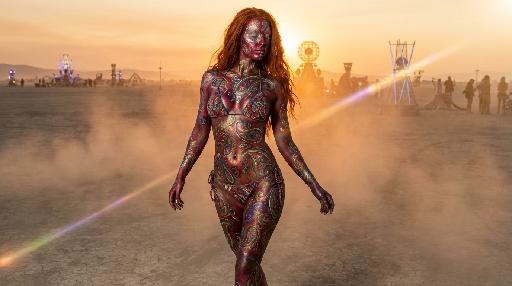
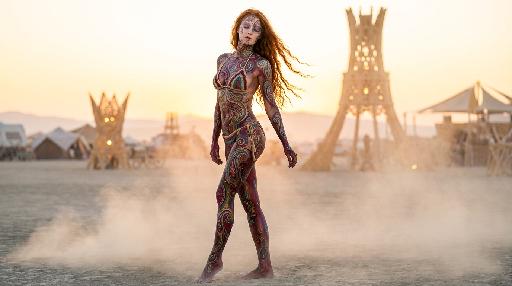
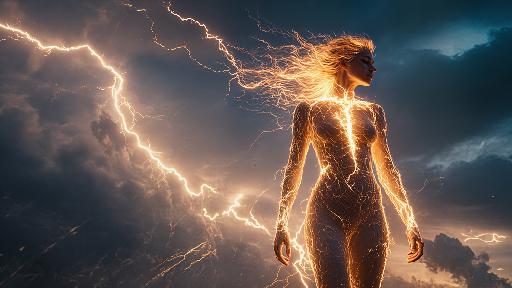
DRAMATIC FULL-BODY PORTRAIT at Burning Man Festival capturing every inch from head to toes of world's most beautiful SLIM woman with LONG FLOWING RED HAIR cascading down her back, whose COMPLETE body INCLUDING FACE, eyelids, lips, eyebrows, forehead is covered in flawless paisley bodypaint with ZERO visible normal skin. FACE FULLY PAINTED with vibrant teardrop paisley in crimson red, sapphire blue, emerald green, gold, amethyst purple flowing across every feature. SLENDER athletic figure, scant crocheted bikini matching paisley pattern – delicate yarn triangles barely covering firm breasts, thin string ties on narrow hips. Burning Man dust swirls around feet, distant art installations glow on Black Rock desert horizon, golden hour lighting with lens flares. Ultra-precise airbrush creates 3D shading on cheekbones; NO UNPAINTED AREAS – total saturation from scalp to soles. Graceful pose, high-fashion festival aesthetic, hyper-realistic bodyart, 8K resolution, cinematic depth of field.

Text To Image AI effects generated image

Text To Image

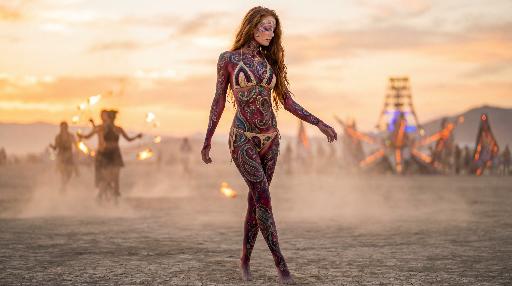
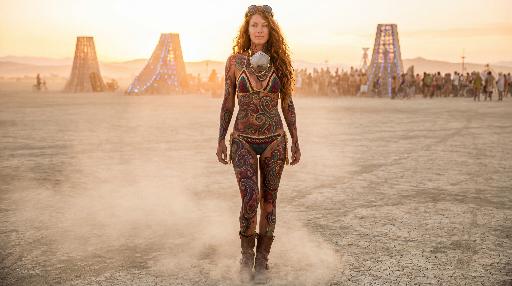
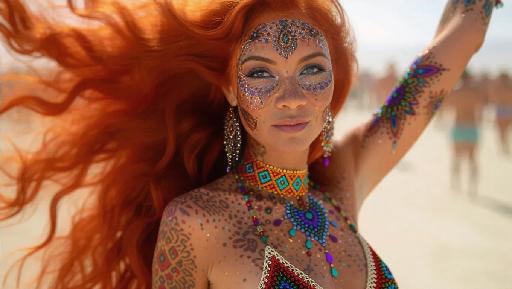
DRAMATIC FULL-BODY PORTRAIT at Burning Man Festival, capturing every inch from head to toes of the world's most beautiful SLIM woman with LONG FLOWING RED HAIR cascading down her back, whose COMPLETE body INCLUDING FACE, eyelids, lips, eyebrows, forehead is covered in flawless paisley bodypaint with ZERO visible normal skin. FACE FULLY PAINTED with vibrant teardrop paisley in crimson red, sapphire blue, emerald green, gold, amethyst purple flowing across every feature. SLENDER athletic figure, scant crocheted bikini matching paisley pattern – delicate yarn triangles barely covering firm breasts, thin string ties on narrow hips. Burning Man dust swirls around feet, distant fire dancers and art installations glow, Black Rock desert horizon, golden hour lighting with lens flares. Ultra-precise airbrush creates 3D shading on cheekbones, NO UNPAINTED AREAS – total saturation from scalp to soles. Graceful pose, high-fashion festival aesthetic, hyper-realistic bodyart, 8K resolution, cinematic, ethereal atmosphere.

Text To Image AI effects generated image

Text To Image

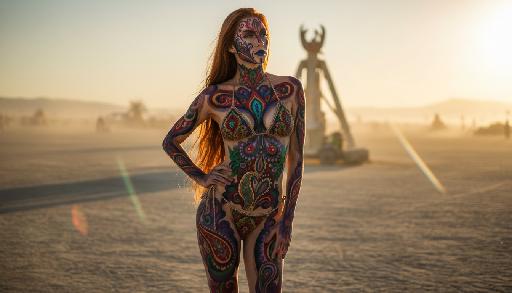
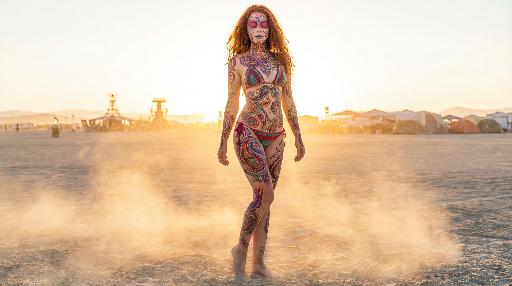
DRAMATIC FULL-BODY PORTRAIT at Burning Man Festival, capturing every inch from head to toes of the world's most beautiful SLIM woman with LONG FLOWING RED HAIR cascading down her back, COMPLETE body INCLUDING FACE, eyelids, lips, eyebrows, forehead flawlessly covered in intricate paisley bodypaint with ZERO visible normal skin. FACE FULLY PAINTED with vibrant teardrop paisley in crimson red, sapphire blue, emerald green, gold, amethyst purple, flowing across every feature. SLENDER athletic figure, scant crocheted bikini matching paisley pattern – delicate yarn triangles barely covering firm breasts, thin string ties on narrow hips. Burning Man dust swirls around feet, distant art installations glow on Black Rock desert horizon, golden hour lighting with lens flares. Ultra-precise airbrush creates 3D shading on cheekbones, NO UNPAINTED AREAS – total saturation from scalp to soles. Graceful pose, high-fashion festival aesthetic, hyper-realistic bodyart, 8K resolution, cinematic depth of field.

Text To Image AI effects generated image

Text To Image

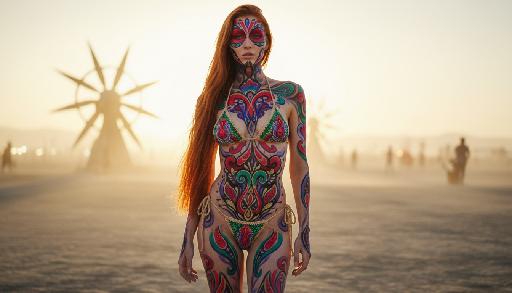
DRAMATIC FULL-BODY PORTRAIT at Burning Man Festival, capturing every inch from head to toes of the world's most beautiful SLIM woman with LONG FLOWING RED HAIR cascading down her back, COMPLETE body INCLUDING FACE, eyelids, lips, eyebrows, forehead flawlessly covered in intricate paisley bodypaint with ZERO visible normal skin. FACE FULLY PAINTED with vibrant teardrop paisley in crimson red, sapphire blue, emerald green, gold, amethyst purple flowing across every feature. SLENDER athletic figure, scant crocheted bikini matching paisley pattern – delicate yarn triangles barely covering firm breasts, thin string ties on narrow hips. Burning Man dust swirls around feet, distant art installations glow on Black Rock desert horizon, golden hour lighting with lens flares. Ultra-precise airbrush creates 3D shading on cheekbones, NO UNPAINTED AREAS – total saturation from scalp to soles. Graceful pose, high-fashion festival aesthetic, hyper-realistic bodyart, 8K resolution, cinematic depth of field.

Text to Image AI effects generated image

Text to Image

A dramatic full-body portrait at the Burning Man Festival captures a slender, athletic woman with long, flowing red hair cascading down her back. Her entire body, including her face, is flawlessly painted in vibrant paisley patterns of crimson red, sapphire blue, emerald green, gold, and amethyst purple. She wears a delicate crocheted bikini that matches the paisley design, with yarn triangles barely covering her firm breasts and thin string ties on her narrow hips. Dust swirls around her feet, while distant art installations glow on the Black Rock Desert horizon during golden hour, with lens flares adding drama. The ultra-precise airbrush creates 3D shading on her cheekbones, ensuring no unpainted areas. She stands in a graceful pose, embodying a high-fashion festival aesthetic, with hyper-realistic body art captured in 8K resolution and cinematic depth of field.

Text To Image AI effects generated image

Text To Image

DRAMATIC FULL-BODY PORTRAIT at Burning Man Festival capturing every inch from head to toes of the world's most beautiful SLIM woman with LONG FLOWING RED HAIR cascading down her back, whose COMPLETE body INCLUDING FACE, eyelids, lips, eyebrows, forehead is covered in flawless paisley bodypaint with ZERO visible normal skin. FACE FULLY PAINTED with vibrant teardrop paisley in crimson red, sapphire blue, emerald green, gold, amethyst purple flowing across every feature. SLENDER athletic figure, scant crocheted bikini matching paisley pattern – delicate yarn triangles barely covering firm breasts, thin string ties on narrow hips. Burning Man dust swirls around feet, distant art installations glow on Black Rock desert horizon, golden hour lighting with lens flares. Ultra-precise airbrush creates 3D shading on cheekbones, NO UNPAINTED AREAS – total saturation from scalp to soles. Graceful pose, high-fashion festival aesthetic, hyper-realistic bodyart, 8K resolution, cinematic depth of field.

Text To Image AI effects generated image

Text To Image

DRAMATIC FULL-BODY PORTRAIT at Burning Man Festival capturing every inch from head to toes of world's most beautiful SLIM woman with LONG FLOWING RED HAIR cascading down her back, whose COMPLETE body INCLUDING FACE, eyelids, lips, eyebrows, forehead is covered in flawless paisley bodypaint with ZERO visible normal skin. FACE FULLY PAINTED with vibrant teardrop paisley in crimson red, sapphire blue, emerald green, gold, amethyst purple flowing across every feature. SLENDER athletic figure, scant crocheted bikini matching paisley pattern – delicate yarn triangles barely covering firm breasts, thin string ties on narrow hips. Burning Man dust swirls around feet, distant art installations glow on Black Rock desert horizon, golden hour lighting with lens flares. Ultra-precise airbrush creates 3D shading on cheekbones; NO UNPAINTED AREAS – total saturation from scalp to soles. Graceful pose, high-fashion festival aesthetic, hyper-realistic bodyart, 8K resolution, cinematic depth of field.

Text To Image AI effects generated image

Text To Image

DRAMATIC FULL-BODY PORTRAIT at Burning Man Festival, capturing every inch from head to toes of the world's most beautiful SLIM woman with LONG FLOWING RED HAIR cascading down her back, COMPLETE body INCLUDING FACE, eyelids, lips, eyebrows, forehead flawlessly painted in intricate paisley patterns with ZERO visible normal skin. FACE FULLY PAINTED with vibrant teardrop paisley in crimson red, sapphire blue, emerald green, gold, amethyst purple flowing across every feature. SLENDER athletic figure, scant crocheted bikini matching paisley pattern – delicate yarn triangles barely covering firm breasts, thin string ties on narrow hips. Burning Man dust swirls around feet, distant art installations glow on Black Rock desert horizon, golden hour lighting with lens flares. Ultra-precise airbrush creates 3D shading on cheekbones, NO UNPAINTED AREAS – total saturation from scalp to soles. Graceful pose, high-fashion festival aesthetic, hyper-realistic bodyart, 8K resolution, cinematic depth of field.

Text to Image AI effects generated image

Text to Image

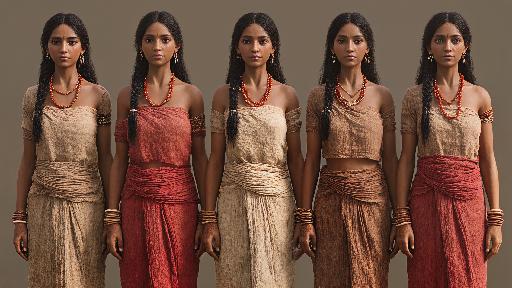
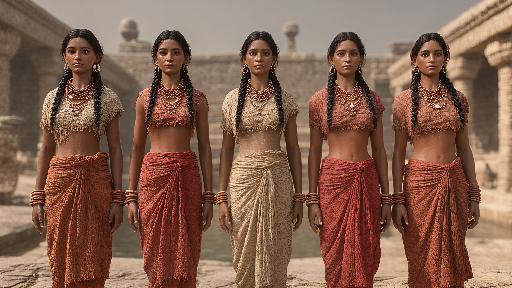
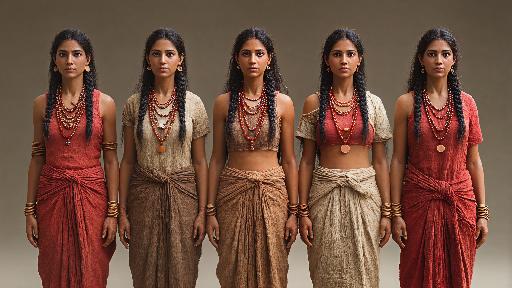
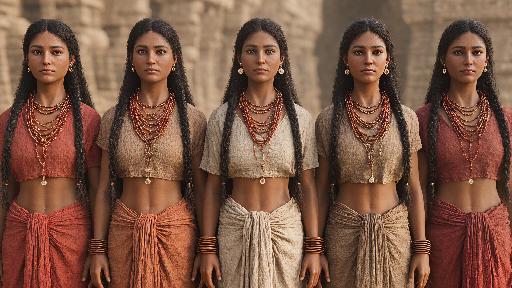
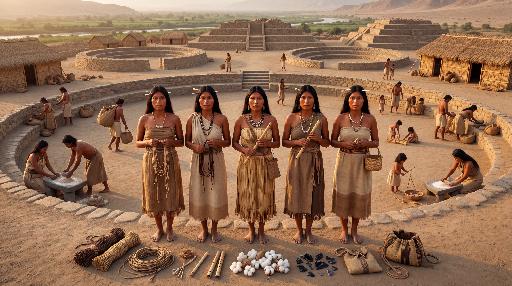
Ultra-photorealistic 8K still image of five identical Indus Valley women from Harappa/Mohenjo-Daro (2600–2000 BCE peak period), standing in perfect straight line formation facing viewer, authentic proto-Dravidian features (smooth medium-brown skin, dark almond-shaped eyes, straight black hair in long braids with shell ornaments, sturdy healthy builds). Stable, archaeologically accurate cotton clothing & confirmed accessories: Simple draped cotton lower garments (dhoti-style shorts to knees) in natural earth tones (ochre red, beige-brown, mud-red) Short upper body wraps/tunics showing shoulders/arms Terracotta bangles (Harappa finds), carnelian bead necklaces (6-8 etched beads), shell disc earrings, ivory combs Subtle kohl lining, minimal henna on hands Precise group positioning (left to right): Tallest: ochre red dhoti + beige wrap, largest carnelian necklace Medium: brown dhoti + red wrap, terracotta bangles both arms Center: beige dhoti + ochre wrap, double carnelian + shell strand Medium: red dhoti + brown wrap, single large shell earrings Shortest: mud-red dhoti + beige wrap, ivory comb in braid FOREGROUND – Authentic archaeological objects: 10+ unicorn seals (clay tablets w/ Indus script), cubical stone weights (1:2:4 system) Wheel-turned pottery (storage jars, cooking pots, toy bulls), etched carnelian bead piles Lapis lazuli chunks, small ivory tusks, copper razors/fishhooks DETAILED LIVELY BACKGROUND (50+ authentic Indus people – NO ONE completely naked): 15 MEN: medium-brown skin, short hair/turbans, dhoti loincloths + upper body wraps, carrying 20kg grain sacks, pushing wooden carts w/ pottery, grinding copper tools, weighing carnelian beads on stone scales 25 WOMEN: long braided hair, knee-length cotton skirts + shoulder wraps, grinding grain on saddle querns, spinning cotton at looms, filling water jars from brick wells w/ pulley ropes, carving conch shell bangles 12 CHILDREN (4-10yrs): small draped cloths/loincloths covering properly, playing w/ terracotta bulls/birds, mini wooden carts, clay whistles Potters spinning wheels (red pottery), perlenmacher drilling carnelian, farmers w/ wheat/cotton bundles, fishermen mending nets PHOTOREALISTIC SETTING – Mohenjo-Daro Great Bath (thriving): Golden hour through 1:2:4 brick arches, Great Bath (12×7m pool) w/ 10 bathers using copper dippers Active street drains flowing, courtyard houses (flat roofs), lush monsoon valley (wheat/cotton fields, flowing Indus) Egalitarian metropolis vibe – no kings/palaces, geometric streets bustling Ultra-photorealistic details: Skin pores/sweat sheen/dust on feet for ALL 55+ figures, cotton weave texture, brick mortar gaps Depth of field: razor-sharp dancers/objects, detailed populated background Warm golden monsoon lighting, physically correct shadows

Text To Image AI effects generated image

Text To Image

DRAMATIC FULL-BODY PORTRAIT at Burning Man Festival, capturing every inch from head to toes of the world's most beautiful SLIM woman with LONG FLOWING RED HAIR cascading down her back, COMPLETE body INCLUDING FACE, eyelids, lips, eyebrows, forehead flawlessly covered in intricate paisley bodypaint with ZERO visible normal skin. FACE FULLY PAINTED with vibrant teardrop paisley in crimson red, sapphire blue, emerald green, gold, amethyst purple flowing across every feature. SLENDER athletic figure, scant crocheted bikini matching paisley pattern – delicate yarn triangles barely covering firm breasts, thin string ties on narrow hips. Burning Man dust swirls around feet, distant art installations glow on Black Rock desert horizon, golden hour lighting with lens flares. Ultra-precise airbrush creates 3D shading on cheekbones, NO UNPAINTED AREAS – total saturation from scalp to soles. Graceful pose, high-fashion festival aesthetic, hyper-realistic bodyart, 8K resolution, cinematic depth of field.

Text to Image AI effects generated image

Text to Image

DRAMATIC FULL-BODY PORTRAIT at Burning Man Festival, capturing every inch from head to toes of the world's most beautiful SLIM woman with LONG FLOWING RED HAIR cascading down her back, COMPLETE body INCLUDING FACE, eyelids, lips, eyebrows, forehead flawlessly painted in intricate paisley patterns with ZERO visible normal skin. FACE FULLY PAINTED with vibrant teardrop paisley in crimson red, sapphire blue, emerald green, gold, amethyst purple, flowing seamlessly across every feature. SLENDER athletic figure, scant crocheted bikini matching paisley pattern – delicate yarn triangles barely covering firm breasts, thin string ties on narrow hips. Burning Man dust swirls around feet, distant art installations glowing on Black Rock desert horizon, golden hour lighting with lens flares. Ultra-precise airbrush creates 3D shading on cheekbones, NO UNPAINTED AREAS – total saturation from scalp to soles. Graceful pose, high-fashion festival aesthetic, hyper-realistic bodyart, 8K resolution, cinematic depth of field.

Text to Image AI effects generated image

Text to Image

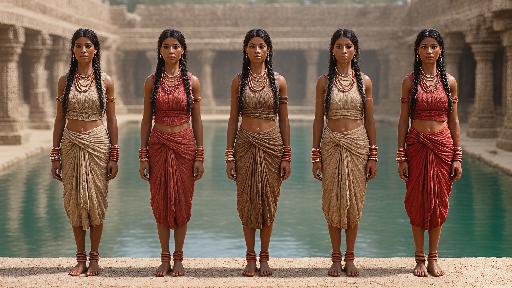
Indus Valley Harappa Culture – Ultra Photorealistic IMAGE for Vivago.ai.2 (FULL Background Restored) Ultra-photorealistic 8K still image of five identical Indus Valley women from Harappa/Mohenjo-Daro (2600–2000 BCE peak period), standing in perfect straight line formation facing viewer at foreground edge of Mohenjo-Daro Great Bath, authentic proto-Dravidian features (smooth medium-brown skin, dark almond-shaped eyes, straight black hair in long braids with shell ornaments, sturdy healthy builds). Stable, archaeologically accurate cotton clothing: Simple draped cotton dhoti-style shorts to knees + upper body wraps in natural earth tones (ochre red, beige-brown, mud-red) Terracotta bangles, carnelian bead necklaces (6-8 etched beads), shell disc earrings, ivory combs Precise positioning: tallest left → shortest right, natural height variation [CRITICAL] FULLY DETAILED PHOTOREALISTIC BACKGROUND – 50+ PEOPLE + OBJECTS: GREAT BATH (12×7m stepped pool directly behind dancers): 10 bathers using copper dippers, water surface reflecting golden hour light IMMEDIATE BACKGROUND (20m depth): 15 MEN (dhoti + wraps): carrying 20kg grain sacks from granary, pushing wooden carts w/ wheel-turned pottery, grinding copper razors on stones, weighing carnelian beads on cubical stone scales (1:2:4 system) 25 WOMEN (knee-length skirts + shoulder wraps): grinding grain on saddle querns, spinning cotton at looms, filling water jars from brick wells w/ pulley ropes, carving conch shell bangles 12 CHILDREN (small draped cloths): playing w/ terracotta bulls/birds, mini wooden carts, clay whistles FOREGROUND OBJECTS (scattered around dancers' feet): 10+ unicorn seals (clay tablets w/ Indus script), cubical stone weights, etched carnelian bead piles, lapis lazuli chunks, small ivory tusks, copper fishhooks/razors MIDGROUND (50m depth): Potters spinning wheels (red pottery), perlenmacher drilling carnelian, farmers w/ wheat/cotton bundles, fishermen mending nets FAR BACKGROUND (lush monsoon valley): Green wheat/cotton fields, flowing Indus river w/ reed boats, golden hour mist ARCHITECTURE: Baked brick walls (1:2:4 ratio) w/ geometric arches, active street drains flowing, courtyard houses w/ flat roofs, NO ruins/palaces Ultra-photorealistic details: Skin pores/sweat sheen/dust on ALL 55+ figures' feet Cotton weave texture, brick mortar gaps, copper patina Perfect depth of field: razor-sharp foreground dancers + objects, detailed populated background Warm golden monsoon lighting, physically correct shadows

Text to Image AI effects generated image

Text to Image

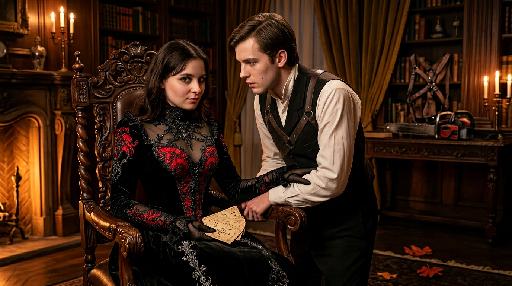
Ultra-photorealistic 4K cinematic shot of five Indus Valley women from Harappa/Mohenjo-Daro (2600–2000 BCE Blütezeit), all with authentic proto-Dravidian features (smooth medium-brown skin, dark eyes, black hair, sturdy healthy builds). The same five women stay consistent for the whole 10 seconds: same faces, same body proportions, same height differences. They wear stable, non-changing cotton clothing based on archaeological evidence: – Simple draped cotton robes/shorts (dhoti-style lower garments to knees, upper body wraps or short tunics) in natural earth tones (ochre red, beige, brown) from Indus cotton monopoly. – Terracotta bangles, carnelian bead necklaces, shell earrings, ivory combs – all physically attached, moving only with body motion and gravity. – Long braided hair with shell/faience ornaments, subtle kohl eye lining. – No magical fabric growth, no new jewelry appearing, no colorful saris (historically inaccurate). CAMERA & DURATION (exact 10 seconds): – 0–2s: slow dolly in toward the five women in a shallow arc, mid-wide shot showing Great Bath context. – 2–8s: camera holds steady frontal three-quarter view; minimal handheld micro-movement, no big swings. – 8–10s: slight push-in as they complete pose in straight line facing viewer. Seamless 10-second loop possible, no character morphing. DANCE (subtle, controlled, stable poses): – All women keep relative positions; no teleporting/swapping. – Movement mostly in arms/hands/hips; feet stay in small radius on brick floor. – 1–4s: slow synchronized arm waves (mimicking Indus river flow) with gentle hip sway. – 4–7s: coordinated half-body turn showing cotton drapes moving naturally with inertia/gravity, no cloth clipping. – 7–10s: return to calm frontal line, weight on one leg, hands in final gesture; pose held 1+ seconds. SETTING (photoreal Mohenjo-Daro Great Bath, Blütezeit): – Golden hour afternoon at intact Great Bath (12×7m stepped pool, water filled, people bathing), baked brick walls (1:2:4 ratio) with subtle geometric patterns. – Surrounding citadel platform with active granary, unicorn clay seals on tables, potter's wheels turning, clean street drains flowing. – Lush green Indus river valley background (strong monsoon climate), distant fields with wheat/cotton, flowing river with boats, no desert/drought look. – Courtyard houses (inward-facing, flat roofs), geometric streets with market bustle, trade caravans with cedar logs, ivory tusks, gem piles. – Soft atmospheric haze, temple-free egalitarian vibe, children playing with terracotta toys. VISUAL STYLE: – Ultra-photorealism: natural skin texture, dust on feet, sweat sheen from heat, physically correct shadows/global illumination. – Realistic cloth physics: cotton weight/inertia, no popping/stretching. – Stable frame-to-frame: no morphing, no "AI swim," consistent details. – Warm monsoon-season lighting, high dynamic range, natural earth tones dominant.
Text to Image AI effects generated image

Text to Image

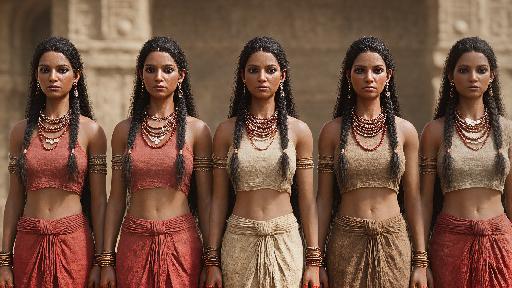
Indus Valley Harappa Culture – Ultra Photorealistic IMAGE for Vivago.ai.2 (FULL Background Restored) Ultra-photorealistic 8K still image of five identical Indus Valley women from Harappa/Mohenjo-Daro (2600–2000 BCE peak period), standing in perfect straight line formation facing viewer at foreground edge of Mohenjo-Daro Great Bath, authentic proto-Dravidian features (smooth medium-brown skin, dark almond-shaped eyes, straight black hair in long braids with shell ornaments, sturdy healthy builds). Stable, archaeologically accurate cotton clothing: Simple draped cotton dhoti-style shorts to knees + upper body wraps in natural earth tones (ochre red, beige-brown, mud-red) Terracotta bangles, carnelian bead necklaces (6-8 etched beads), shell disc earrings, ivory combs Precise positioning: tallest left → shortest right, natural height variation [CRITICAL] FULLY DETAILED PHOTOREALISTIC BACKGROUND – 50+ PEOPLE + OBJECTS: GREAT BATH (12×7m stepped pool directly behind dancers): 10 bathers using copper dippers, water surface reflecting golden hour light IMMEDIATE BACKGROUND (20m depth): 15 MEN (dhoti + wraps): carrying 20kg grain sacks from granary, pushing wooden carts w/ wheel-turned pottery, grinding copper razors on stones, weighing carnelian beads on cubical stone scales (1:2:4 system) 25 WOMEN (knee-length skirts + shoulder wraps): grinding grain on saddle querns, spinning cotton at looms, filling water jars from brick wells w/ pulley ropes, carving conch shell bangles 12 CHILDREN (small draped cloths): playing w/ terracotta bulls/birds, mini wooden carts, clay whistles FOREGROUND OBJECTS (scattered around dancers' feet): 10+ unicorn seals (clay tablets w/ Indus script), cubical stone weights, etched carnelian bead piles, lapis lazuli chunks, small ivory tusks, copper fishhooks/razors MIDGROUND (50m depth): Potters spinning wheels (red pottery), perlenmacher drilling carnelian, farmers w/ wheat/cotton bundles, fishermen mending nets FAR BACKGROUND (lush monsoon valley): Green wheat/cotton fields, flowing Indus river w/ reed boats, golden hour mist ARCHITECTURE: Baked brick walls (1:2:4 ratio) w/ geometric arches, active street drains flowing, courtyard houses w/ flat roofs, NO ruins/palaces Ultra-photorealistic details: Skin pores/sweat sheen/dust on ALL 55+ figures' feet Cotton weave texture, brick mortar gaps, copper patina Perfect depth of field: razor-sharp foreground dancers + objects, detailed populated background Warm golden monsoon lighting, physically correct shadows
Text to Image AI effects generated image

Text to Image

Ultra-photorealistic 8K still image of five identical Indus Valley women from Harappa/Mohenjo-Daro (2600–2000 BCE peak period), standing in perfect straight line formation facing viewer, authentic proto-Dravidian features (smooth medium-brown skin, dark almond-shaped eyes, straight black hair in long braids with shell ornaments, sturdy healthy builds). Stable, archaeologically accurate cotton clothing & confirmed accessories: Simple draped cotton lower garments (dhoti-style shorts to knees) in natural earth tones (ochre red, beige-brown, mud-red) Short upper body wraps/tunics showing shoulders/arms Terracotta bangles (Harappa finds), carnelian bead necklaces (6-8 etched beads), shell disc earrings, ivory combs Subtle kohl lining, minimal henna on hands Precise group positioning (left to right): Tallest: ochre red dhoti + beige wrap, largest carnelian necklace Medium: brown dhoti + red wrap, terracotta bangles both arms Center: beige dhoti + ochre wrap, double carnelian + shell strand Medium: red dhoti + brown wrap, single large shell earrings Shortest: mud-red dhoti + beige wrap, ivory comb in braid FOREGROUND – Authentic archaeological objects: 10+ unicorn seals (clay tablets w/ Indus script), cubical stone weights (1:2:4 system) Wheel-turned pottery (storage jars, cooking pots, toy bulls), etched carnelian bead piles Lapis lazuli chunks, small ivory tusks, copper razors/fishhooks DETAILED LIVELY BACKGROUND (50+ authentic Indus people – NO ONE completely naked): 15 MEN: medium-brown skin, short hair/turbans, dhoti loincloths + upper body wraps, carrying 20kg grain sacks, pushing wooden carts w/ pottery, grinding copper tools, weighing carnelian beads on stone scales 25 WOMEN: long braided hair, knee-length cotton skirts + shoulder wraps, grinding grain on saddle querns, spinning cotton at looms, filling water jars from brick wells w/ pulley ropes, carving conch shell bangles 12 CHILDREN (4-10yrs): small draped cloths/loincloths covering properly, playing w/ terracotta bulls/birds, mini wooden carts, clay whistles Potters spinning wheels (red pottery), perlenmacher drilling carnelian, farmers w/ wheat/cotton bundles, fishermen mending nets PHOTOREALISTIC SETTING – Mohenjo-Daro Great Bath (thriving): Golden hour through 1:2:4 brick arches, Great Bath (12×7m pool) w/ 10 bathers using copper dippers Active street drains flowing, courtyard houses (flat roofs), lush monsoon valley (wheat/cotton fields, flowing Indus) Egalitarian metropolis vibe – no kings/palaces, geometric streets bustling Ultra-photorealistic details: Skin pores/sweat sheen/dust on feet for ALL 55+ figures, cotton weave texture, brick mortar gaps Depth of field: razor-sharp dancers/objects, detailed populated background Warm golden monsoon lighting, physically correct shadows

Text to Image AI effects generated image

Text to Image

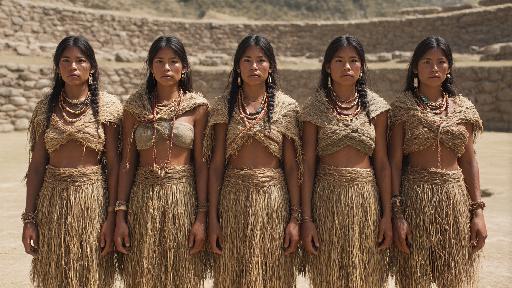
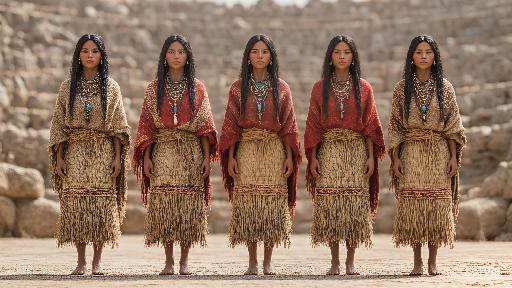
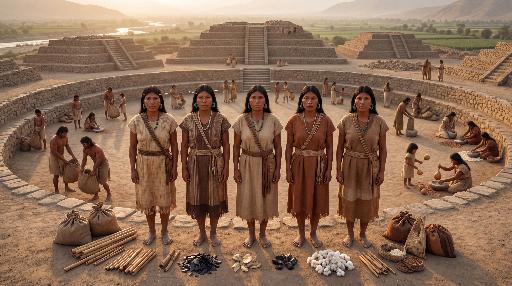
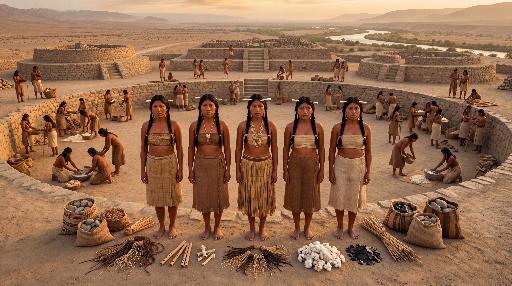
Ultra-photorealistic 8K still image of five identical Caral-Supe women from Sacred City of Caral, Peru (Late Archaic Period, 3000–1800 BCE peak), standing in perfect straight line formation facing viewer at edge of main sunken circular plaza, authentic Norte Chico features (copper-brown skin, straight black hair, prominent cheekbones, sturdy Andean builds, dark expressive eyes). Stable, archaeologically accurate organic-fiber clothing (NO ceramics/weaving evidence): Simple woven reed/grass skirts to knees in natural tones (beige reeds, reddish-brown llama fiber) Minimal upper body wraps (llama wool bands across chest) or topless with reed shawls Quipu cords draped over shoulders (knotted counting strings – Caral signature find) Stone/wood beads (cotton seeds, quartz, shell), llama bone hairpins, turquoise ear spools NO metal, NO ceramics, NO colorful dyes – natural materials only Precise group positioning (left to right): Tallest: reed skirt + red llama band, largest quipu cords + stone necklace Medium: brown grass skirt + beige shawl, bone hairpins both sides Center: beige reed skirt + double quipu strands + shell necklace Medium: red skirt + brown shawl, single large turquoise ear spool Shortest: natural reed skirt + llama band, prominent bone hairpin FOREGROUND – Authentic Caral-Supe archaeological objects: 15+ quipu bundles (multi-colored knotted cords on reed frames) Reed flutes (18 bone/wood flutes excavated), whistling water vessels Cotton boll piles (domesticated plants), llama bone tools, obsidian blades Shicra bags (bundled reeds filled with stones for pyramid construction) DETAILED LIVELY BACKGROUND (50+ Caral-Supe people around Plaza Mayor): 15 MEN: copper-brown skin, short hair, reed skirts + shawls, hauling shicra bags (20kg stone-filled reed bundles), carrying llama offerings, arranging quipu records 25 WOMEN: long straight hair, grass skirts + minimal wraps, grinding cotton seeds on stone manos/metates, weaving reed baskets, filling gourd water vessels 12 CHILDREN (small reed cloths): playing w/ cotton boll toys, mini quipu cords, reed whistles Musicians blowing bone flutes, construction workers stacking shicra bags PHOTOREALISTIC SETTING – Caral Sacred City (intact peak period): Golden hour over Plaza Mayor (sunken circular plaza, 100m diameter), surrounded by six earthen platform pyramids (Pirámide Mayor 18m high, stone-faced) Dry desert terrace overlooking green Supe river valley (irrigated cotton/squash fields) Circular stone amphitheaters, reed-thatched elite residences, llama corrals NO ceramics, NO metal tools, NO defensive walls – peaceful ceremonial city Ultra-photorealistic details: Natural skin texture (sunburn, windburn), reed weave texture, llama wool fuzz Depth of field: sharp foreground women/objects, detailed populated background Harsh coastal desert lighting w/ long shadows, dust haze from construction

Text to Image AI effects generated image

Text to Image

Ultra-photorealistic 8K still image of five identical Caral-Supe women from Sacred City of Caral, Peru (Late Archaic Period, 3000–1800 BCE peak), standing in perfect straight line formation facing viewer at edge of main sunken circular plaza, authentic Norte Chico features (copper-brown skin, straight black hair, prominent cheekbones, sturdy Andean builds, dark expressive eyes). Stable, archaeologically accurate organic-fiber clothing (NO ceramics/weaving evidence): Simple woven reed/grass skirts to knees in natural tones (beige reeds, reddish-brown llama fiber) Minimal upper body wraps (llama wool bands across chest) or topless with reed shawls Quipu cords draped over shoulders (knotted counting strings – Caral signature find) Stone/wood beads (cotton seeds, quartz, shell), llama bone hairpins, turquoise ear spools NO metal, NO ceramics, NO colorful dyes – natural materials only Precise group positioning (left to right): Tallest: reed skirt + red llama band, largest quipu cords + stone necklace Medium: brown grass skirt + beige shawl, bone hairpins both sides Center: beige reed skirt + double quipu strands + shell necklace Medium: red skirt + brown shawl, single large turquoise ear spool Shortest: natural reed skirt + llama band, prominent bone hairpin FOREGROUND – Authentic Caral-Supe archaeological objects: 15+ quipu bundles (multi-colored knotted cords on reed frames) Reed flutes (18 bone/wood flutes excavated), whistling water vessels Cotton boll piles (domesticated plants), llama bone tools, obsidian blades Shicra bags (bundled reeds filled with stones for pyramid construction) DETAILED LIVELY BACKGROUND (50+ Caral-Supe people around Plaza Mayor): 15 MEN: copper-brown skin, short hair, reed skirts + shawls, hauling shicra bags (20kg stone-filled reed bundles), carrying llama offerings, arranging quipu records 25 WOMEN: long straight hair, grass skirts + minimal wraps, grinding cotton seeds on stone manos/metates, weaving reed baskets, filling gourd water vessels 12 CHILDREN (small reed cloths): playing w/ cotton boll toys, mini quipu cords, reed whistles Musicians blowing bone flutes, construction workers stacking shicra bags PHOTOREALISTIC SETTING – Caral Sacred City (intact peak period): Golden hour over Plaza Mayor (sunken circular plaza, 100m diameter), surrounded by six earthen platform pyramids (Pirámide Mayor 18m high, stone-faced) Dry desert terrace overlooking green Supe river valley (irrigated cotton/squash fields) Circular stone amphitheaters, reed-thatched elite residences, llama corrals NO ceramics, NO metal tools, NO defensive walls – peaceful ceremonial city Ultra-photorealistic details: Natural skin texture (sunburn, windburn), reed weave texture, llama wool fuzz Depth of field: sharp foreground women/objects, detailed populated background Harsh coastal desert lighting w/ long shadows, dust haze from construction

Text to Image AI effects generated image

Text to Image

Ultra-photorealistic 8K still image of five identical Caral-Supe women from Sacred City of Caral, Peru (Late Archaic Period, 3000–1800 BCE peak), standing in perfect straight line formation facing viewer at edge of main sunken circular plaza, authentic Norte Chico features (copper-brown skin, straight black hair, prominent cheekbones, sturdy Andean builds, dark expressive eyes). Stable, archaeologically accurate organic-fiber clothing (NO ceramics/weaving evidence): Simple woven reed/grass skirts to knees in natural tones (beige reeds, reddish-brown llama fiber) Minimal upper body wraps (llama wool bands across chest) or topless with reed shawls Quipu cords draped over shoulders (knotted counting strings – Caral signature find) Stone/wood beads (cotton seeds, quartz, shell), llama bone hairpins, turquoise ear spools NO metal, NO ceramics, NO colorful dyes – natural materials only Precise group positioning (left to right): Tallest: reed skirt + red llama band, largest quipu cords + stone necklace Medium: brown grass skirt + beige shawl, bone hairpins both sides Center: beige reed skirt + double quipu strands + shell necklace Medium: red skirt + brown shawl, single large turquoise ear spool Shortest: natural reed skirt + llama band, prominent bone hairpin FOREGROUND – Authentic Caral-Supe archaeological objects: 15+ quipu bundles (multi-colored knotted cords on reed frames) Reed flutes (18 bone/wood flutes excavated), whistling water vessels Cotton boll piles (domesticated plants), llama bone tools, obsidian blades Shicra bags (bundled reeds filled with stones for pyramid construction) DETAILED LIVELY BACKGROUND (50+ Caral-Supe people around Plaza Mayor): 15 MEN: copper-brown skin, short hair, reed skirts + shawls, hauling shicra bags (20kg stone-filled reed bundles), carrying llama offerings, arranging quipu records 25 WOMEN: long straight hair, grass skirts + minimal wraps, grinding cotton seeds on stone manos/metates, weaving reed baskets, filling gourd water vessels 12 CHILDREN (small reed cloths): playing w/ cotton boll toys, mini quipu cords, reed whistles Musicians blowing bone flutes, construction workers stacking shicra bags PHOTOREALISTIC SETTING – Caral Sacred City (intact peak period): Golden hour over Plaza Mayor (sunken circular plaza, 100m diameter), surrounded by six earthen platform pyramids (Pirámide Mayor 18m high, stone-faced) Dry desert terrace overlooking green Supe river valley (irrigated cotton/squash fields) Circular stone amphitheaters, reed-thatched elite residences, llama corrals NO ceramics, NO metal tools, NO defensive walls – peaceful ceremonial city Ultra-photorealistic details: Natural skin texture (sunburn, windburn), reed weave texture, llama wool fuzz Depth of field: sharp foreground women/objects, detailed populated background Harsh coastal desert lighting w/ long shadows, dust haze from construction

Text to Image AI effects generated image

Text to Image

Ultra-photorealistic 8K still image of five identical Caral-Supe women from Sacred City of Caral, Peru (Late Archaic Period, 3000–1800 BCE peak), standing in perfect straight line formation facing viewer at edge of main sunken circular plaza, authentic Norte Chico features (copper-brown skin, straight black hair, prominent cheekbones, sturdy Andean builds, dark expressive eyes). Stable, archaeologically accurate organic-fiber clothing (NO ceramics/weaving evidence): Simple woven reed/grass skirts to knees in natural tones (beige reeds, reddish-brown llama fiber) Minimal upper body wraps (llama wool bands across chest) or topless with reed shawls Quipu cords draped over shoulders (knotted counting strings – Caral signature find) Stone/wood beads (cotton seeds, quartz, shell), llama bone hairpins, turquoise ear spools NO metal, NO ceramics, NO colorful dyes – natural materials only Precise group positioning (left to right): Tallest: reed skirt + red llama band, largest quipu cords + stone necklace Medium: brown grass skirt + beige shawl, bone hairpins both sides Center: beige reed skirt + double quipu strands + shell necklace Medium: red skirt + brown shawl, single large turquoise ear spool Shortest: natural reed skirt + llama band, prominent bone hairpin FOREGROUND – Authentic Caral-Supe archaeological objects: 15+ quipu bundles (multi-colored knotted cords on reed frames) Reed flutes (18 bone/wood flutes excavated), whistling water vessels Cotton boll piles (domesticated plants), llama bone tools, obsidian blades Shicra bags (bundled reeds filled with stones for pyramid construction) DETAILED LIVELY BACKGROUND (50+ Caral-Supe people around Plaza Mayor): 15 MEN: copper-brown skin, short hair, reed skirts + shawls, hauling shicra bags (20kg stone-filled reed bundles), carrying llama offerings, arranging quipu records 25 WOMEN: long straight hair, grass skirts + minimal wraps, grinding cotton seeds on stone manos/metates, weaving reed baskets, filling gourd water vessels 12 CHILDREN (small reed cloths): playing w/ cotton boll toys, mini quipu cords, reed whistles Musicians blowing bone flutes, construction workers stacking shicra bags PHOTOREALISTIC SETTING – Caral Sacred City (intact peak period): Golden hour over Plaza Mayor (sunken circular plaza, 100m diameter), surrounded by six earthen platform pyramids (Pirámide Mayor 18m high, stone-faced) Dry desert terrace overlooking green Supe river valley (irrigated cotton/squash fields) Circular stone amphitheaters, reed-thatched elite residences, llama corrals NO ceramics, NO metal tools, NO defensive walls – peaceful ceremonial city Ultra-photorealistic details: Natural skin texture (sunburn, windburn), reed weave texture, llama wool fuzz Depth of field: sharp foreground women/objects, detailed populated background Harsh coastal desert lighting w/ long shadows, dust haze from construction

Text to Image AI effects generated image

Text to Image

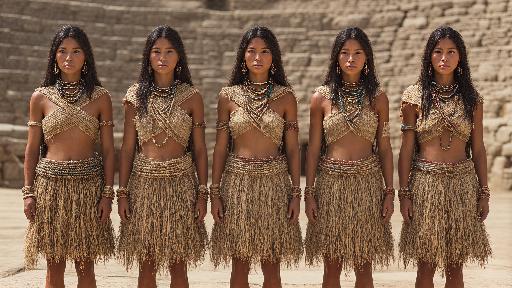
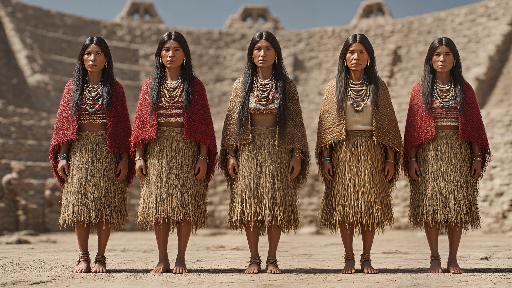
Ultra-photorealistic 8K still image showing five identical Caral-Supe women FULL BODY from head to feet, standing in perfect straight line formation facing viewer at edge of main sunken circular Plaza Mayor, authentic Norte Chico features (copper-brown skin, straight black hair, prominent cheekbones, sturdy Andean builds, dark expressive eyes). FULL BODY VIEW – Stable, archaeologically accurate organic-fiber clothing: Woven reed/grass skirts reaching mid-calf (completely visible), natural beige/brown tones Minimal llama wool chest bands (narrow horizontal bands across breasts) or reed shawls draped over shoulders Quipu cords (knotted counting strings) draped visibly over both shoulders Stone/quartz necklaces, llama bone hairpins, turquoise ear spools fully visible Bare feet completely visible on dusty plaza floor, NO cropped legs/feet Precise full-body group positioning (left to right, ALL feet visible): Tallest (5'6"): beige reed skirt + red llama band, largest quipu + stone necklace Medium (5'3"): brown grass skirt + beige shawl, bone hairpins both sides Center (5'2"): beige reed skirt + double quipu strands + shell necklace Medium (5'1"): red skirt + brown shawl, single large turquoise ear spool Shortest (4'11"): natural reed skirt + llama band, prominent bone hairpin FOREGROUND – Authentic archaeological objects (around visible feet): 15+ quipu bundles, reed flutes, cotton boll piles, llama bone tools, shicra bags DETAILED LIVELY BACKGROUND (50+ Caral-Supe people around Plaza Mayor): 15 MEN hauling 20kg shicra bags, carrying llama offerings 25 WOMEN grinding cotton seeds, weaving reed baskets, filling gourd vessels 12 CHILDREN playing with cotton boll toys, mini quipu cords PHOTOREALISTIC SETTING – Caral Sacred City (intact peak period): Golden hour over Plaza Mayor (100m diameter sunken circular plaza), surrounded by six earthen platform pyramids Dry desert terrace overlooking green Supe river valley (irrigated cotton fields) Circular stone amphitheaters, reed-thatched residences visible in background CRITICAL COMPOSITION: Full body framing: Heads at top 1/4, feet at bottom 1/8 of frame, NO CROPPING Perfect depth of field: razor-sharp full-body women + foreground objects, detailed populated background Natural skin texture (sunburn, windburn), reed weave visible, dust on completely visible bare feet

Text To Image AI effects generated image

Text To Image

Indus Valley Harappa Culture – Ultra Photorealistic IMAGE (Complete w/ Detailed Background People) Ultra-photorealistic 8K still image of five identical Indus Valley women from Harappa/Mohenjo-Daro (2600–2000 BCE peak period), standing in perfect straight line formation facing viewer, authentic proto-Dravidian features (smooth medium-brown skin, dark almond-shaped eyes, straight black hair in long braids with shell ornaments, sturdy healthy builds). Stable, archaeologically accurate cotton clothing & confirmed accessories: Simple draped cotton lower garments (dhoti-style shorts to knees) in natural earth tones (ochre red, beige-brown, mud-red) Short upper body wraps/tunics showing shoulders/arms Terracotta bangles (Harappa finds), carnelian bead necklaces (6-8 etched beads), shell disc earrings, ivory combs Subtle kohl lining, minimal henna on hands Precise group positioning (left to right): Tallest: ochre red dhoti + beige wrap, largest carnelian necklace Medium: brown dhoti + red wrap, terracotta bangles both arms Center: beige dhoti + ochre wrap, double carnelian + shell strand Medium: red dhoti + brown wrap, single large shell earrings Shortest: mud-red dhoti + beige wrap, ivory comb in braid FOREGROUND – Authentic archaeological objects: 10+ unicorn seals (clay tablets w/ Indus script), cubical stone weights (1:2:4 system) Wheel-turned pottery (storage jars, cooking pots, toy bulls), etched carnelian bead piles Lapis lazuli chunks, small ivory tusks, copper razors/fishhooks DETAILED LIVELY BACKGROUND (50+ authentic Indus people): 15 MEN: medium-brown skin, short hair/turbans, dhoti loincloths, carrying 20kg grain sacks, pushing wooden carts w/ pottery, grinding copper tools, weighing carnelian beads on stone scales 25 WOMEN: long braided hair, knee-length cotton skirts + wraps, grinding grain on saddle querns, spinning cotton at looms, filling water jars from brick wells w/ pulley ropes, carving conch shell bangles 12 CHILDREN (4-10yrs): minimal cloths, playing w/ terracotta bulls/birds, mini wooden carts, clay whistles Potters spinning wheels (red pottery), perlenmacher drilling carnelian, farmers w/ wheat/cotton bundles, fishermen mending nets PHOTOREALISTIC SETTING – Mohenjo-Daro Great Bath (thriving): Golden hour through 1:2:4 brick arches, Great Bath (12×7m pool) w/ 10 bathers using copper dippers Active street drains flowing, courtyard houses (flat roofs), lush monsoon valley (wheat/cotton fields, flowing Indus) Egalitarian metropolis vibe – no kings/palaces, geometric streets bustling Ultra-photorealistic details: Skin pores/sweat sheen/dust on feet for ALL 55+ figures, cotton weave texture, brick mortar gaps Depth of field: razor-sharp dancers/objects, detailed populated background Warm golden monsoon lighting, physically correct shadows

Text to Image AI effects generated image

Text to Image

Indus Valley Harappa Culture – Ultra Photorealistic IMAGE (Complete w/ Detailed Background People) Ultra-photorealistic 8K still image of five identical Indus Valley women from Harappa/Mohenjo-Daro (2600–2000 BCE peak period), standing in perfect straight line formation facing viewer, authentic proto-Dravidian features (smooth medium-brown skin, dark almond-shaped eyes, straight black hair in long braids with shell ornaments, sturdy healthy builds). Stable, archaeologically accurate cotton clothing & confirmed accessories: Simple draped cotton lower garments (dhoti-style shorts to knees) in natural earth tones (ochre red, beige-brown, mud-red) Short upper body wraps/tunics showing shoulders/arms Terracotta bangles (Harappa finds), carnelian bead necklaces (6-8 etched beads), shell disc earrings, ivory combs Subtle kohl lining, minimal henna on hands Precise group positioning (left to right): Tallest: ochre red dhoti + beige wrap, largest carnelian necklace Medium: brown dhoti + red wrap, terracotta bangles both arms Center: beige dhoti + ochre wrap, double carnelian + shell strand Medium: red dhoti + brown wrap, single large shell earrings Shortest: mud-red dhoti + beige wrap, ivory comb in braid FOREGROUND – Authentic archaeological objects: 10+ unicorn seals (clay tablets w/ Indus script), cubical stone weights (1:2:4 system) Wheel-turned pottery (storage jars, cooking pots, toy bulls), etched carnelian bead piles Lapis lazuli chunks, small ivory tusks, copper razors/fishhooks DETAILED LIVELY BACKGROUND (50+ authentic Indus people): 15 MEN: medium-brown skin, short hair/turbans, dhoti loincloths, carrying 20kg grain sacks, pushing wooden carts w/ pottery, grinding copper tools, weighing carnelian beads on stone scales 25 WOMEN: long braided hair, knee-length cotton skirts + wraps, grinding grain on saddle querns, spinning cotton at looms, filling water jars from brick wells w/ pulley ropes, carving conch shell bangles 12 CHILDREN (4-10yrs): minimal cloths, playing w/ terracotta bulls/birds, mini wooden carts, clay whistles Potters spinning wheels (red pottery), perlenmacher drilling carnelian, farmers w/ wheat/cotton bundles, fishermen mending nets PHOTOREALISTIC SETTING – Mohenjo-Daro Great Bath (thriving): Golden hour through 1:2:4 brick arches, Great Bath (12×7m pool) w/ 10 bathers using copper dippers Active street drains flowing, courtyard houses (flat roofs), lush monsoon valley (wheat/cotton fields, flowing Indus) Egalitarian metropolis vibe – no kings/palaces, geometric streets bustling Ultra-photorealistic details: Skin pores/sweat sheen/dust on feet for ALL 55+ figures, cotton weave texture, brick mortar gaps Depth of field: razor-sharp dancers/objects, detailed populated background Warm golden monsoon lighting, physically correct shadows

Text to Image AI effects generated image

Text to Image

Ultra-photorealistic 8K still image showing five identical Caral-Supe women FULL BODY from head to feet, standing in perfect straight line formation facing viewer at edge of main sunken circular Plaza Mayor, authentic Norte Chico features (copper-brown skin, straight black hair, prominent cheekbones, sturdy Andean builds, dark expressive eyes). FULL BODY VIEW – Stable, archaeologically accurate organic-fiber clothing: Woven reed/grass skirts reaching mid-calf (completely visible), natural beige/brown tones Minimal llama wool chest bands (narrow horizontal bands across breasts) or reed shawls draped over shoulders Quipu cords (knotted counting strings) draped visibly over both shoulders Stone/quartz necklaces, llama bone hairpins, turquoise ear spools fully visible Bare feet completely visible on dusty plaza floor, NO cropped legs/feet Precise full-body group positioning (left to right, ALL feet visible): Tallest (5'6"): beige reed skirt + red llama band, largest quipu + stone necklace Medium (5'3"): brown grass skirt + beige shawl, bone hairpins both sides Center (5'2"): beige reed skirt + double quipu strands + shell necklace Medium (5'1"): red skirt + brown shawl, single large turquoise ear spool Shortest (4'11"): natural reed skirt + llama band, prominent bone hairpin FOREGROUND – Authentic archaeological objects (around visible feet): 15+ quipu bundles, reed flutes, cotton boll piles, llama bone tools, shicra bags DETAILED LIVELY BACKGROUND (50+ Caral-Supe people around Plaza Mayor): 15 MEN hauling 20kg shicra bags, carrying llama offerings 25 WOMEN grinding cotton seeds, weaving reed baskets, filling gourd vessels 12 CHILDREN playing with cotton boll toys, mini quipu cords PHOTOREALISTIC SETTING – Caral Sacred City (intact peak period): Golden hour over Plaza Mayor (100m diameter sunken circular plaza), surrounded by six earthen platform pyramids Dry desert terrace overlooking green Supe river valley (irrigated cotton fields) Circular stone amphitheaters, reed-thatched residences visible in background CRITICAL COMPOSITION: Full body framing: Heads at top 1/4, feet at bottom 1/8 of frame, NO CROPPING Perfect depth of field: razor-sharp full-body women + foreground objects, detailed populated background Natural skin texture (sunburn, windburn), reed weave visible, dust on completely visible bare feet

Text to Image AI effects generated image

Text to Image

Indus Valley Harappa Culture – Ultra Photorealistic IMAGE (Complete w/ Detailed Background People) Ultra-photorealistic 8K still image of five identical Indus Valley women from Harappa/Mohenjo-Daro (2600–2000 BCE peak period), standing in perfect straight line formation facing viewer, authentic proto-Dravidian features (smooth medium-brown skin, dark almond-shaped eyes, straight black hair in long braids with shell ornaments, sturdy healthy builds). Stable, archaeologically accurate cotton clothing & confirmed accessories: Simple draped cotton lower garments (dhoti-style shorts to knees) in natural earth tones (ochre red, beige-brown, mud-red) Short upper body wraps/tunics showing shoulders/arms Terracotta bangles (Harappa finds), carnelian bead necklaces (6-8 etched beads), shell disc earrings, ivory combs Subtle kohl lining, minimal henna on hands Precise group positioning (left to right): Tallest: ochre red dhoti + beige wrap, largest carnelian necklace Medium: brown dhoti + red wrap, terracotta bangles both arms Center: beige dhoti + ochre wrap, double carnelian + shell strand Medium: red dhoti + brown wrap, single large shell earrings Shortest: mud-red dhoti + beige wrap, ivory comb in braid FOREGROUND – Authentic archaeological objects: 10+ unicorn seals (clay tablets w/ Indus script), cubical stone weights (1:2:4 system) Wheel-turned pottery (storage jars, cooking pots, toy bulls), etched carnelian bead piles Lapis lazuli chunks, small ivory tusks, copper razors/fishhooks DETAILED LIVELY BACKGROUND (50+ authentic Indus people): 15 MEN: medium-brown skin, short hair/turbans, dhoti loincloths, carrying 20kg grain sacks, pushing wooden carts w/ pottery, grinding copper tools, weighing carnelian beads on stone scales 25 WOMEN: long braided hair, knee-length cotton skirts + wraps, grinding grain on saddle querns, spinning cotton at looms, filling water jars from brick wells w/ pulley ropes, carving conch shell bangles 12 CHILDREN (4-10yrs): minimal cloths, playing w/ terracotta bulls/birds, mini wooden carts, clay whistles Potters spinning wheels (red pottery), perlenmacher drilling carnelian, farmers w/ wheat/cotton bundles, fishermen mending nets PHOTOREALISTIC SETTING – Mohenjo-Daro Great Bath (thriving): Golden hour through 1:2:4 brick arches, Great Bath (12×7m pool) w/ 10 bathers using copper dippers Active street drains flowing, courtyard houses (flat roofs), lush monsoon valley (wheat/cotton fields, flowing Indus) Egalitarian metropolis vibe – no kings/palaces, geometric streets bustling Ultra-photorealistic details: Skin pores/sweat sheen/dust on feet for ALL 55+ figures, cotton weave texture, brick mortar gaps Depth of field: razor-sharp dancers/objects, detailed populated background Warm golden monsoon lighting, physically correct shadows

Text To Image AI effects generated image

Text To Image

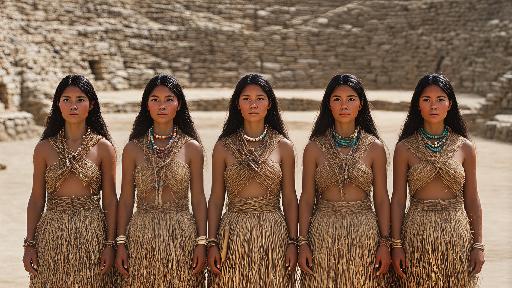
Caral-Supe Civilization – Ultra Photorealistic FULL-BODY IMAGE (Women Completely Inside Frame) Ultra-photorealistic 8K full-body image of five beautiful women from the ancient Caral-Supe civilization (Sacred City of Caral, Peru, c. 2500–1800 BCE), all completely visible from head to toes within the image frame with no body parts outside or cut off by edges, standing in a perfect straight line facing the viewer at the upper edge of the main sunken circular plaza. Show authentic early Andean / Norte Chico features: copper-brown skin, straight black hair, high cheekbones, dark expressive eyes, sturdy but elegant builds. All five women entirely contained within frame boundaries, bare feet clearly visible on dusty plaza floor. They wear archaeologically plausible organic-fiber clothing: woven reed or grass skirts reaching mid-calf in natural beige and brown tones, narrow llama-wool chest bands or simple reed shawls covering the chest, no modern tailoring. Over their shoulders hang visible quipu cords (knotted counting strings) in natural fiber colors. Jewelry is simple and ancient: stone and quartz bead necklaces, small shell elements, llama bone hairpins in their hair, and turquoise-style ear spools – all attached physically and not changing or growing. Each woman has a slightly different combination of skirt tone, band or shawl, necklace and hair ornament, but everything stays within a realistic, natural color palette. Around their feet in the foreground lie authentic Caral-Supe objects: several quipu bundles neatly coiled, reed flutes and simple bone flutes, piles of raw cotton bolls, llama bone tools, obsidian blade flakes, and a few shicra bags (woven reed bags filled with stones used in pyramid construction). All objects look used and functional, not decorative props. The background is a lively, fully populated Caral scene with more than 50 people from the same epoch. In and around the sunken Plaza Mayor behind the women, show about 15 men in reed skirts and shawls hauling heavy shicra bags, carrying small llama offerings and arranging construction stones; about 25 women in grass skirts and chest bands grinding cotton seeds on stone manos and metates, weaving reed baskets, and filling gourd water vessels; around 12 children in small reed cloths playing with cotton-boll toys, tiny quipu cords, and reed whistles. Place a group of musicians blowing bone flutes near the plaza steps, and a few workers higher up on the platforms. Surround the plaza with the characteristic Caral architecture: six low, earthen platform pyramids faced with stone (especially the Pirámide Mayor), circular stone amphitheater structures, and a few reed-thatched elite residences on the terraces. In the far background, show the dry coastal desert plateau dropping down to a green Supe River valley with irrigated cotton and squash fields and a winding river. Lighting is warm golden hour just before sunset, with long soft shadows, slight dust haze in the air, and physically accurate shading on skin, reeds, and stone. Style is ultra-photorealistic: detailed pores and slight sunburn on all visible skin, clear reed weave and llama-wool texture, dust on the women's feet, sharp focus on the five full-body women and foreground objects, slightly softer but still detailed background. All women completely inside frame boundaries with no limbs, hair, or feet extending beyond image edges.

Text To Image AI effects generated image

Text To Image

Caral-Supe Civilization – Ultra Photorealistic FULL-BODY IMAGE (Women Completely Inside Frame) Ultra-photorealistic 8K full-body image of five beautiful women from the ancient Caral-Supe civilization (Sacred City of Caral, Peru, c. 2500–1800 BCE), all completely visible from head to toes within the image frame with no body parts outside or cut off by edges, standing in a perfect straight line facing the viewer at the upper edge of the main sunken circular plaza. Show authentic early Andean / Norte Chico features: copper-brown skin, straight black hair, high cheekbones, dark expressive eyes, sturdy but elegant builds. All five women entirely contained within frame boundaries, bare feet clearly visible on dusty plaza floor. They wear archaeologically plausible organic-fiber clothing: woven reed or grass skirts reaching mid-calf in natural beige and brown tones, narrow llama-wool chest bands or simple reed shawls covering the chest, no modern tailoring. Over their shoulders hang visible quipu cords (knotted counting strings) in natural fiber colors. Jewelry is simple and ancient: stone and quartz bead necklaces, small shell elements, llama bone hairpins in their hair, and turquoise-style ear spools – all attached physically and not changing or growing. Each woman has a slightly different combination of skirt tone, band or shawl, necklace and hair ornament, but everything stays within a realistic, natural color palette. Around their feet in the foreground lie authentic Caral-Supe objects: several quipu bundles neatly coiled, reed flutes and simple bone flutes, piles of raw cotton bolls, llama bone tools, obsidian blade flakes, and a few shicra bags (woven reed bags filled with stones used in pyramid construction). All objects look used and functional, not decorative props. The background is a lively, fully populated Caral scene with more than 50 people from the same epoch. In and around the sunken Plaza Mayor behind the women, show about 15 men in reed skirts and shawls hauling heavy shicra bags, carrying small llama offerings and arranging construction stones; about 25 women in grass skirts and chest bands grinding cotton seeds on stone manos and metates, weaving reed baskets, and filling gourd water vessels; around 12 children in small reed cloths playing with cotton-boll toys, tiny quipu cords, and reed whistles. Place a group of musicians blowing bone flutes near the plaza steps, and a few workers higher up on the platforms. Surround the plaza with the characteristic Caral architecture: six low, earthen platform pyramids faced with stone (especially the Pirámide Mayor), circular stone amphitheater structures, and a few reed-thatched elite residences on the terraces. In the far background, show the dry coastal desert plateau dropping down to a green Supe River valley with irrigated cotton and squash fields and a winding river. Lighting is warm golden hour just before sunset, with long soft shadows, slight dust haze in the air, and physically accurate shading on skin, reeds, and stone. Style is ultra-photorealistic: detailed pores and slight sunburn on all visible skin, clear reed weave and llama-wool texture, dust on the women's feet, sharp focus on the five full-body women and foreground objects, slightly softer but still detailed background. All women completely inside frame boundaries with no limbs, hair, or feet extending beyond image edges.

Text To Image AI effects generated image

Text To Image

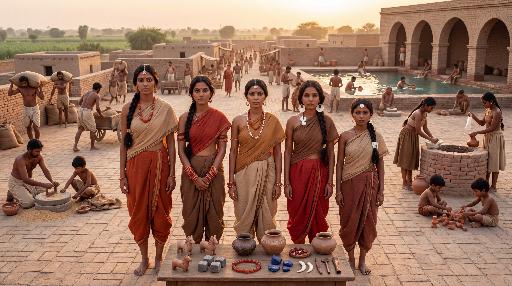
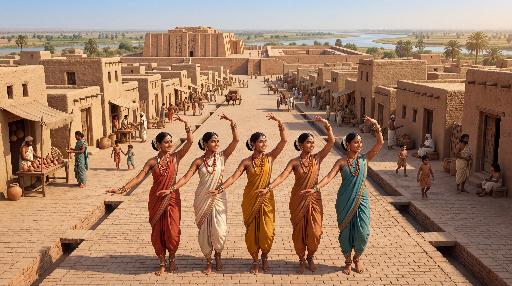
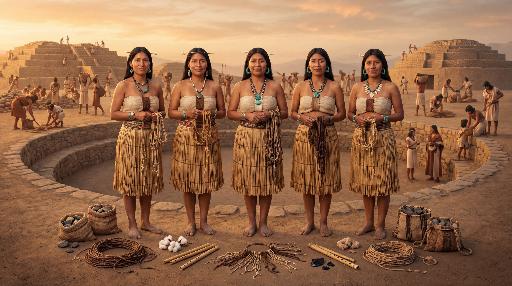
Photorealistic scene of a bustling Indus Valley Civilization city like Mohenjo-Daro or Harappa at its peak around 2600 BCE, vibrant daytime under clear blue sky with Indus River in distant background, fertile plains and palm trees. Foreground: Five beautiful young women standing in a perfect straight line on a wide brick-paved street (10m broad, straight north-south axis), fully visible from head to toe, poised and ready to dance with joyful expressions, arms gracefully raised in synchronized pose. They wear authentic lightweight cotton draped garments (long shawls over one shoulder, ankle-length skirts/dhotis) in earthy terracotta red, off-white, ochre yellow, and subtle blue-green dyes; adorned with large colorful beaded necklaces (carnelian, agate, shell beads), bangles, anklets, nose rings, and hair buns with shell combs – no modern elements, historically accurate Dravidian features, smooth brown skin, long dark hair. Background: Thriving non-ruined city with precise orthogonal grid street layout (right angles, rounded corners for carts), uniform multi-story baked-brick houses (standard bricks 28x14x7cm, 1-2 stories high, flat roofs accessed by external stairs, deep central courtyards for light/ventilation, minimal street-facing windows, wooden door frames), elevated Citadel mound with massive granary platform (50x50m ventilated shafts) and nearby Great Bath (12x7m rectangular pool, 2.4m deep, bitumen waterproofed, flanked by changing rooms and stepped access ramps), market stalls with clay seals, advanced covered brick drains (1m wide with inspection holes) lining every street, people in period clothing (men in simple kilts/dhotis carrying pottery or baskets, women in shawls with jewelry trading goods), ox-carts, children playing, overall lively urban atmosphere. Highly detailed, authentic archaeology-based reconstruction, warm sunlight, high resolution, no anachronisms, cinematic composition focusing on the women line against the cityscape.

Text To Image AI effects generated image

Text To Image

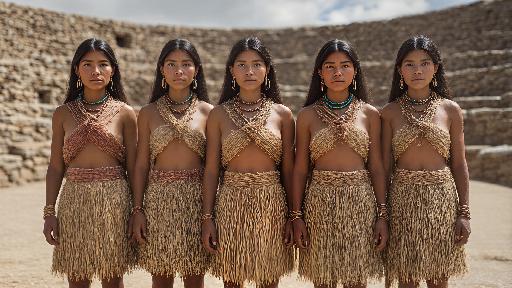
Caral-Supe Civilization – Ultra Photorealistic FULL-BODY IMAGE (Beautiful Women Completely Inside Frame) Ultra-photorealistic 8K full-body image of five strikingly beautiful women from the ancient Caral-Supe civilization (Sacred City of Caral, Peru, c. 2500–1800 BCE), all completely visible from head to toes within the image frame with no body parts outside or cut off by edges, standing in a perfect straight line facing the viewer at the upper edge of the main sunken circular plaza. Show authentic early Andean / Norte Chico features enhanced with natural beauty: flawless copper-brown skin glowing in golden hour light, long straight lustrous black hair, elegantly high cheekbones, captivating dark expressive almond-shaped eyes, full sensual lips, sturdy yet gracefully feminine builds with attractive curves. All five women entirely contained within frame boundaries, bare feet clearly visible on dusty plaza floor. They wear archaeologically plausible organic-fiber clothing accentuating their beauty: finely woven reed or grass skirts reaching mid-calf in natural beige and brown tones that elegantly drape their hips, narrow llama-wool chest bands tastefully accentuating their figures or simple reed shawls softly draped over shoulders, no modern tailoring. Over their shoulders hang visible quipu cords (knotted counting strings) in natural fiber colors that complement their beauty. Jewelry is simple yet striking: polished stone and quartz bead necklaces resting beautifully on collarbones, small shell elements, llama bone hairpins artfully securing their lustrous hair, and turquoise-style ear spools highlighting their elegant faces – all attached physically and not changing or growing. Each woman has a slightly different combination of skirt tone, band or shawl, necklace and hair ornament that enhances her individual beauty, but everything stays within a realistic, natural color palette. Around their perfectly visible bare feet in the foreground lie authentic Caral-Supe objects: several quipu bundles neatly coiled, reed flutes and simple bone flutes, piles of raw cotton bolls, llama bone tools, obsidian blade flakes, and a few shicra bags (woven reed bags filled with stones used in pyramid construction). All objects look used and functional, not decorative props. The background is a lively, fully populated Caral scene with more than 50 people from the same epoch. In and around the sunken Plaza Mayor behind the women, show about 15 men in reed skirts and shawls hauling heavy shicra bags, carrying small llama offerings and arranging construction stones; about 25 women in grass skirts and chest bands grinding cotton seeds on stone manos and metates, weaving reed baskets, and filling gourd water vessels; around 12 children in small reed cloths playing with cotton-boll toys, tiny quipu cords, and reed whistles. Place a group of musicians blowing bone flutes near the plaza steps, and a few workers higher up on the platforms. Surround the plaza with the characteristic Caral architecture: six low, earthen platform pyramids faced with stone (especially the Pirámide Mayor), circular stone amphitheater structures, and a few reed-thatched elite residences on the terraces. In the far background, show the dry coastal desert plateau dropping down to a green Supe River valley with irrigated cotton and squash fields and a winding river. Lighting is warm golden hour just before sunset, with long soft shadows, slight dust haze in the air, and physically accurate shading on skin, reeds, and stone. Style is ultra-photorealistic: detailed facial beauty with perfect skin pores and slight natural sunburn glow on all visible skin, clear reed weave and llama-wool texture, dust on the women's feet, sharp focus on the five full-body women and foreground objects, slightly softer but still detailed background. All women completely inside frame boundaries with no limbs, hair, or feet extending beyond image edges.

Text To Image AI effects generated image

Text To Image

Caral-Supe Civilization – Ultra Photorealistic FULL-BODY IMAGE (Beautiful Women Completely Inside Frame) Ultra-photorealistic 8K full-body image of five strikingly beautiful women from the ancient Caral-Supe civilization (Sacred City of Caral, Peru, c. 2500–1800 BCE), all completely visible from head to toes within the image frame with no body parts outside or cut off by edges, standing in a perfect straight line facing the viewer at the upper edge of the main sunken circular plaza. Show authentic early Andean / Norte Chico features enhanced with natural beauty: flawless copper-brown skin glowing in golden hour light, long straight lustrous black hair, elegantly high cheekbones, captivating dark expressive almond-shaped eyes, full sensual lips, sturdy yet gracefully feminine builds with attractive curves. All five women entirely contained within frame boundaries, bare feet clearly visible on dusty plaza floor. They wear archaeologically plausible organic-fiber clothing accentuating their beauty: finely woven reed or grass skirts reaching mid-calf in natural beige and brown tones that elegantly drape their hips, narrow llama-wool chest bands tastefully accentuating their figures or simple reed shawls softly draped over shoulders, no modern tailoring. Over their shoulders hang visible quipu cords (knotted counting strings) in natural fiber colors that complement their beauty. Jewelry is simple yet striking: polished stone and quartz bead necklaces resting beautifully on collarbones, small shell elements, llama bone hairpins artfully securing their lustrous hair, and turquoise-style ear spools highlighting their elegant faces – all attached physically and not changing or growing. Each woman has a slightly different combination of skirt tone, band or shawl, necklace and hair ornament that enhances her individual beauty, but everything stays within a realistic, natural color palette. Around their perfectly visible bare feet in the foreground lie authentic Caral-Supe objects: several quipu bundles neatly coiled, reed flutes and simple bone flutes, piles of raw cotton bolls, llama bone tools, obsidian blade flakes, and a few shicra bags (woven reed bags filled with stones used in pyramid construction). All objects look used and functional, not decorative props. The background is a lively, fully populated Caral scene with more than 50 people from the same epoch. In and around the sunken Plaza Mayor behind the women, show about 15 men in reed skirts and shawls hauling heavy shicra bags, carrying small llama offerings and arranging construction stones; about 25 women in grass skirts and chest bands grinding cotton seeds on stone manos and metates, weaving reed baskets, and filling gourd water vessels; around 12 children in small reed cloths playing with cotton-boll toys, tiny quipu cords, and reed whistles. Place a group of musicians blowing bone flutes near the plaza steps, and a few workers higher up on the platforms. Surround the plaza with the characteristic Caral architecture: six low, earthen platform pyramids faced with stone (especially the Pirámide Mayor), circular stone amphitheater structures, and a few reed-thatched elite residences on the terraces. In the far background, show the dry coastal desert plateau dropping down to a green Supe River valley with irrigated cotton and squash fields and a winding river. Lighting is warm golden hour just before sunset, with long soft shadows, slight dust haze in the air, and physically accurate shading on skin, reeds, and stone. Style is ultra-photorealistic: detailed facial beauty with perfect skin pores and slight natural sunburn glow on all visible skin, clear reed weave and llama-wool texture, dust on the women's feet, sharp focus on the five full-body women and foreground objects, slightly softer but still detailed background. All women completely inside frame boundaries with no limbs, hair, or feet extending beyond image edges.

Text To Image AI effects generated image

Text To Image

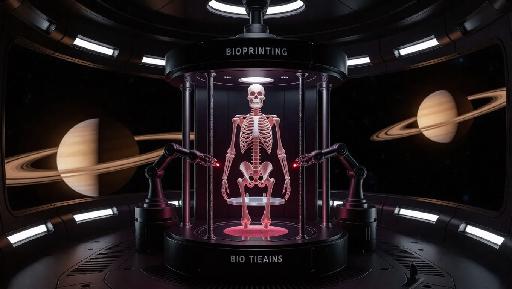
Prompt: A hyper-detailed sci-fi interior of a cutting-edge bioprinting lab aboard a colossal space station orbiting Saturn, panoramic viewport revealing the planet's golden bands and shimmering rings against deep starry void. Central focus: enormous industrial 3D bioprinter tower with multiple articulated robotic arms, glowing nozzles extruding translucent bio-ink layer by precise layer – skeletal frame already complete with white bone lattice, muscle fibers weaving in red organic strands, vascular system pulsing neon-blue fluid through forming arteries, skin sheets materializing translucent then pigmenting to natural tones, facial features emerging with closed eyes and forming hair follicles; sparks fly from calibration lasers scanning each layer. Walls lined with futuristic tech: dozens of holographic monitors projecting rotating DNA helixes, real-time print progress bars (67% complete), biometric vitals; sleek consoles covered in multicolored LED strips frantically blinking red diagnostic codes, green sync lights, blue data streams racing across panels, amber warning strobes pulsing rhythmically; floating drone cameras circling the print, steam vents hissing, electrical arcs crackling between overhead power conduits. Cyberpunk atmosphere with cold Saturn light filtering through, neon glows casting dramatic shadows, metallic surfaces reflecting multicolored blinks. Cinematic wide-angle composition, ultra-detailed, 8K resolution, 16:9 aspect ratio 

Text To Image AI effects generated image

Text To Image

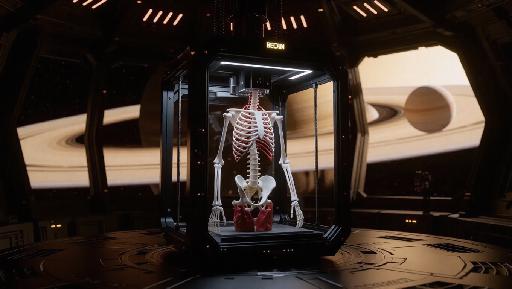
A hyper-detailed sci-fi interior of a cutting-edge bioprinting lab aboard a colossal space station orbiting Saturn, panoramic viewport revealing the planet's golden bands and shimmering rings against deep starry void. Central focus: enormous industrial 3D bioprinter tower with multiple articulated robotic arms, glowing nozzles extruding translucent bio-ink layer by precise layer – skeletal frame already complete with white bone lattice, muscle fibers weaving in red organic strands, vascular system pulsing neon-blue fluid through forming arteries, skin sheets materializing translucent then pigmenting to natural tones, facial features emerging with closed eyes and forming hair follicles; sparks fly from calibration lasers scanning each layer. Walls lined with futuristic tech: dozens of holographic monitors projecting rotating DNA helixes, real-time print progress bars (67% complete), biometric vitals; sleek consoles covered in multicolored LED strips frantically blinking red diagnostic codes, green sync lights, blue data streams racing across panels, amber warning strobes pulsing rhythmically; floating drone cameras circling the print, steam vents hissing, electrical arcs crackling between overhead power conduits. Cyberpunk atmosphere with cold Saturn light filtering through, neon glows casting dramatic shadows, metallic surfaces reflecting multicolored blinks. Cinematic wide-angle composition, ultra-detailed, 8K resolution, 16:9 aspect ratio 

Text To Image AI effects generated image

Text To Image

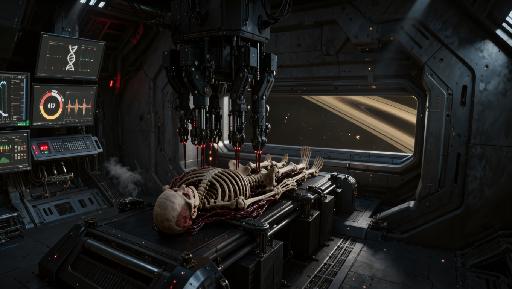
Photorealistic hyper-detailed interior of a dimly lit bioprinting laboratory aboard a massive orbital space station circling Saturn, narrow viewport showing faint golden planetary haze and shadowy rings against endless black void. Central element: towering industrial 3D bioprinter with precise robotic arms depositing viscous bio-ink in meticulous layers – human skeleton formed with porous bone structure, muscle fibers layering in muted red tones, vascular network filling with dark fluid via thin conduits, dermal layers emerging semi-transparent then gaining pale pigmentation, facial features developing with closed eyes; laser scanners emit focused red beams verifying layers amid minimal sparks. Sparse tech elements: three large wall-mounted monitors displaying essential data – single rotating DNA model, progress gauge at 67%, vital signs readout; select console panels with targeted LEDs only – isolated red error light flashing slowly, single green status indicator, faint blue data stream along one edge; cryogenic vapor venting softly, subtle electrical hum. Stark chiaroscuro lighting: cold Saturn light barely filtering through, harsh surgical spotlights creating deep black shadows on matte gray titanium surfaces and scuffed carbon fiber, dust motes visible in thin light beams. Cinematic wide-angle shot with deep depth of field, ultra-photorealistic, 8K HDR, 16:9 aspect ratio.

Text to Image AI effects generated image

Text to Image

Photorealistic hyper-detailed interior of a dimly lit bioprinting lab aboard a massive orbital space station orbiting Saturn, narrow viewport showing faint golden planetary haze and shadowy rings against the endless black void. Central element: towering industrial 3D bioprinter with precise robotic arms depositing viscous bio-ink in meticulous layers – human skeleton with porous bone structure, muscle fibers in muted red tones, vascular network filling with dark fluid via thin conduits, dermal layers emerging semi-transparent then gaining pale pigmentation, facial features developing with closed eyes; laser scanners emitting focused red beams verify layers amid minimal sparks. Sparse tech elements: three large wall-mounted monitors displaying essential data – rotating DNA model, progress gauge at 67%, vital signs readout; console panels with targeted LEDs only – isolated red error light flashing slowly, single green status indicator, faint blue data stream along one edge; cryogenic vapor venting softly, subtle electrical hum. Stark chiaroscuro lighting: cold Saturn light barely filtering through, harsh surgical spotlights creating deep black shadows on matte gray titanium surfaces and scuffed carbon fiber, dust motes visible in thin light beams. Cinematic wide-angle shot with deep depth of field, ultra-photorealistic, 8K HDR, 16:9 aspect ratio.

Text to Image AI effects generated image

Text to Image

Photorealistic hyper-detailed interior of a dimly lit bioprinting laboratory aboard a massive orbital space station circling Saturn, narrow viewport showing faint golden planetary haze and shadowy rings against endless black void. Central element: towering industrial 3D bioprinter with precise robotic arms depositing viscous bio-ink in meticulous layers – human skeleton formed with porous bone structure, muscle fibers layering in muted red tones, vascular network filling with dark fluid via thin conduits, dermal layers emerging semi-transparent then gaining pale pigmentation, facial features developing with closed eyes; laser scanners emit focused red beams verifying layers amid minimal sparks. Sparse tech elements: three large wall-mounted monitors displaying essential data – single rotating DNA model, progress gauge at 67%, vital signs readout; select console panels with targeted LEDs only – isolated red error light flashing slowly, single green status indicator, faint blue data stream along one edge; cryogenic vapor venting softly, subtle electrical hum. Stark chiaroscuro lighting: cold Saturn light barely filtering through, harsh surgical spotlights creating deep black shadows on matte gray titanium surfaces and scuffed carbon fiber, dust motes visible in thin light beams. Cinematic wide-angle shot with deep depth of field, ultra-photorealistic, 8K HDR, 16:9 aspect ratio.

Text To Image AI effects generated image

Text To Image

Photorealistic hyper-detailed interior of a dimly lit bioprinting lab aboard a massive orbital space station orbiting Saturn, narrow viewport revealing faint golden planetary haze and shadowy rings against the endless black void. Central element: towering industrial 3D bioprinter with precise robotic arms depositing viscous bio-ink in meticulous layers – human skeleton forming with porous bone structure, muscle fibers layering in muted red tones, vascular network filling with dark fluid via thin conduits, dermal layers emerging semi-transparent then gaining pale pigmentation, facial features developing with closed eyes; laser scanners emitting focused red beams verifying layers amid minimal sparks. Sparse tech elements: three large wall-mounted monitors displaying essential data – single rotating DNA model, progress gauge at 67%, vital signs readout; select console panels with targeted LEDs only – isolated red error light flashing slowly, single green status indicator, faint blue data stream along one edge; cryogenic vapor venting softly, subtle electrical hum. Stark chiaroscuro lighting: cold Saturn light barely filtering through, harsh surgical spotlights creating deep black shadows on matte gray titanium surfaces and scuffed carbon fiber, dust motes visible in thin light beams. Cinematic wide-angle shot with deep depth of field, ultra-photorealistic, 8K HDR, 16:9 aspect ratio.

Load more